Las Vegas
City limits or county town, Strip-adjacent apartments or Summerlin edge: what actually moves the value of a Las Vegas storage property when you sell it.
We buy self-storage facilities across Nevada for cash and as-is, from conventional drive-up rows to RV yards, small rural sites and land set aside for the next phase. You set the pace, and the conversation stays private.
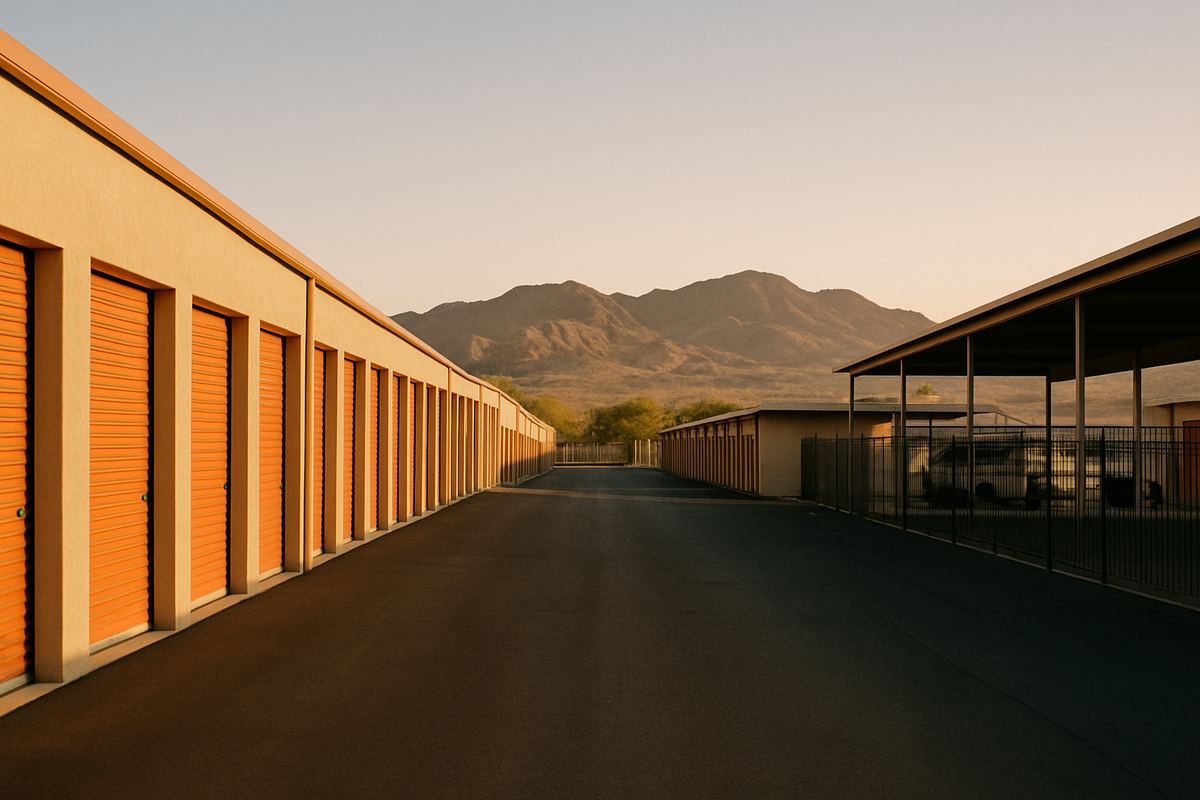
Most of the owners who reach out to us built or bought their facility years ago, ran it themselves, and are now asking what comes next. Some are ready to stop answering the gate-code calls on weekends. Some inherited a property from a parent and live out of state. Others own a site with a partner and no longer agree on where it is going. We buy self-storage in all of those situations, and we buy it directly, without listing it or running it through a bidding process.
The property types we look at include conventional drive-up buildings, climate-controlled interior space, outdoor and covered parking for RVs and boats, small facilities in rural towns, mom-and-pop sites with paper records, and properties that have slipped because management did. We also buy raw or partially improved land that an owner planned for expansion but never built. If you are an owner-operator thinking about retirement without a successor, or you are one of several heirs who received a storage property in an estate, the process is the same: we learn the facility, we make a written offer, and you decide.
Owners usually have more than one reason for selling. The common ones are laid out in our overview of the reasons Nevada storage owners decide to sell, and each has its own page with the questions that tend to come up.
Each file below covers one situation in depth. Open the one that matches where you are.
Done running the office and the gate? A direct sale lets a retiring owner hand off the facility, records and all, without a listing or a repair list.
Inherited a facility from a parent or relative? Keep it steady through probate or trust administration, then sell as-is without learning the storage business.
Occupancy soft, rates stale, delinquency climbing? We buy struggling Nevada facilities as they are and take on the turnaround ourselves.
Doors sticking, asphalt crumbling, roofs leaking, cameras dark? Sell the facility with every item still unfixed and skip the contractor bids.
Co-owners pulling in different directions, or an investor timing an exchange? A direct buyer and a seller-chosen closing date take uncertainty off the table.
Outdoor RV, boat and trailer yards sell differently from mini-warehouses. We buy them as-is, abandoned rigs, gravel and aging canopies included.
Bought extra acreage for phase two that never happened? Sell raw ground, approved pads or a stalled build, with or without the facility.
A broker-run sale and a direct sale are both legitimate ways to sell a storage facility, and they suit different owners. A broker prepares an offering memorandum, markets the property to a list of buyers, collects bids and negotiates on your behalf. That process can create competition, and for a large, stabilized, well-documented facility it is often a sensible choice. It also takes preparation, it puts your facility in front of many people, including competitors and sometimes your own tenants and staff, and it carries a commission at closing.
A direct sale trades that market exposure for simplicity and control. You talk with one buyer, share documents under a confidentiality agreement, and negotiate terms face to face. A direct sale to us carries no broker commission, the facility does not have to be fixed up first, and the operator sets the closing date. The tradeoff is real: you are not running an auction, so you should evaluate our offer against what you believe the property would bring in a marketed process, and you are welcome to get an opinion from a broker before you decide.
| Question | Broker-marketed sale | Direct sale to us |
|---|---|---|
| Who sees your financials | Multiple prospective buyers | One buyer, under an NDA |
| Commission at closing | Typically yes | No agent commission |
| Repairs or cleanup before sale | Often recommended to maximize bids | Not required; we buy as-is |
| Closing date | Driven by the winning bidder and lender | Chosen by you |
| Price discovery | Competitive bidding | A single negotiated offer you can compare |
Owners whose properties have problems a marketed sale would expose, such as weak occupancy, a backlog of repairs, or messy books, often find a direct conversation easier. Owners of trophy assets may not. We would rather you choose the right path than choose us for the wrong reason.
Send the address and whatever basics you have on hand. We read it, call with a handful of questions about the operation, and only after that talk about price. Sending this does not commit you to anything.
Handy to have nearby, though nothing is required to begin:
Would rather talk it through? The red TALK TO ALEX button connects you to our line.
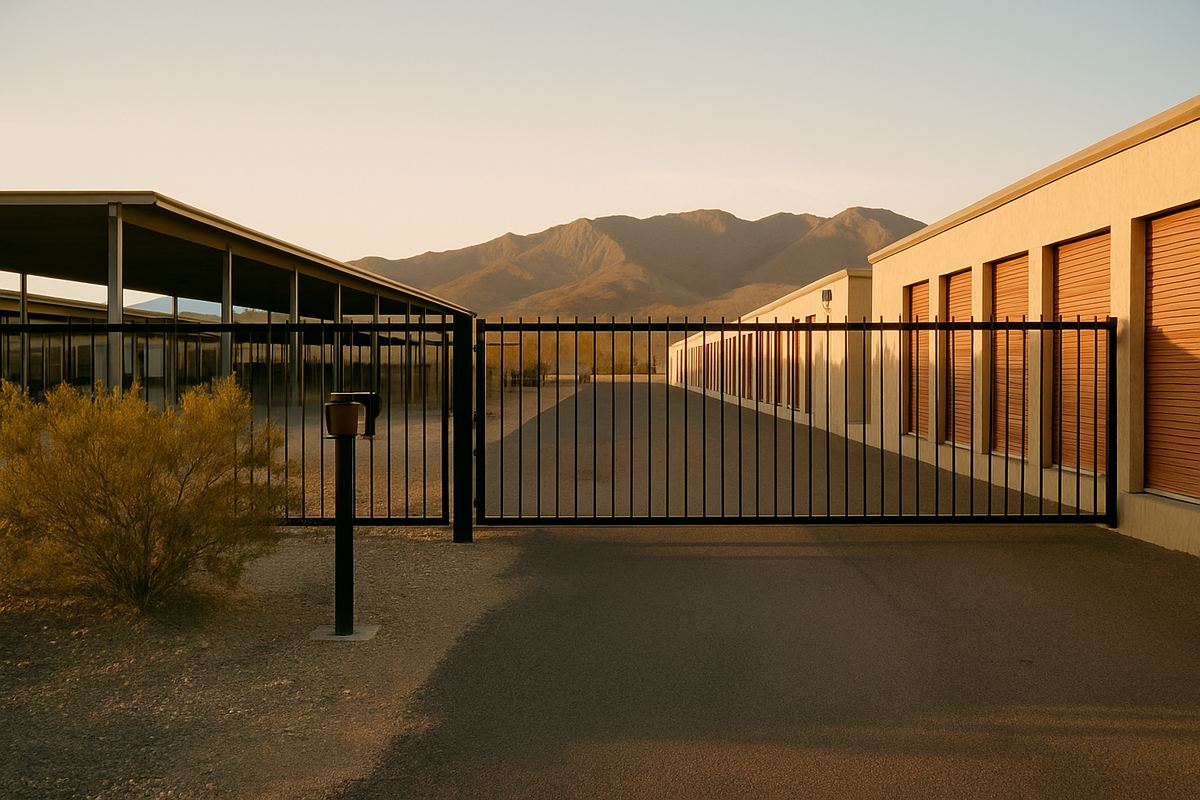
A storage facility is a small operating business sitting on a piece of real estate, and we evaluate both halves. The review is practical. We are trying to understand what the property earns today, what it could earn under steady management, and what it will cost to get from one to the other.
The rent roll tells us who is renting what, at what rate, and since when. We compare the rates long-term tenants are actually paying against the current street rates you advertise to new renters. A wide gap is common at owner-run facilities that rarely raised rents on existing customers, and it is not a defect. It simply shapes how we think about the income going forward.
Physical occupancy counts rented units. Economic occupancy measures how much of the facility's potential rent is actually being collected once discounts, concessions, below-market rates and unpaid balances are accounted for. A facility can look nearly full and still collect noticeably less than its potential, and we look at both numbers rather than either one alone.
We look at how many tenants are behind, how far behind, and where each account sits in the lien process. Nevada has its own statutory rules for storage liens, so a sale that is already in motion needs to be handled carefully when ownership changes. A high delinquency count does not stop a sale. It tells us where the work is.
We note which management software you use, or whether the records live in a ledger and a spreadsheet, along with the gate access system, cameras, kiosk, and whether a tenant insurance or protection program is in place. On the physical side we walk the roll-up doors, paving, roofs, lighting, fencing and drainage, and we look at any remaining land for expansion potential. Deferred maintenance is priced into the offer rather than handed back to you as a repair list. Owners worried about worn-out buildings can read how we handle storage properties with deferred maintenance, and owners of sites that are simply not performing can read about selling a facility with weak occupancy or high delinquency.
We do not use a formula, and we will not quote a figure over the phone before we have seen the property. An offer for a storage facility comes from a few connected judgments, and we walk you through each one when we present it.
First is the income the facility produces today, built from the trailing twelve months of operating statements and checked against the rent roll and bank deposits. Second is a view of the expenses a new owner will actually carry, which sometimes differ from an owner-operator's books because the owner did the management work personally. Third is the capitalization rate, the relationship between net income and value that buyers and lenders use for income property. Cap rates move with interest rates, location, facility size and condition, and we explain which direction those factors push for your property without pretending there is one correct number. Fourth is the capital the property needs over the next few years, from paving to doors to a software change.
The offer you receive is in writing, usually as a letter of intent that sets out price, deposit, the length of the due diligence period, who pays which closing costs, and a target closing date you pick. Terms can matter as much as price. Some owners want a quick, clean exit. Others prefer a longer close, a leaseback on an on-site residence, or some form of seller financing. The sequence from first call to escrow is described step by step on our page about how a direct storage facility sale works.
From the Las Vegas Valley out to Pahrump and Mesquite, and north to Reno, Sparks and Carson City.
City limits or county town, Strip-adjacent apartments or Summerlin edge: what actually moves the value of a Las Vegas storage property when you sell it.
Downsizing retirees, fast-building master plans and lake-bound boaters all rent storage in Henderson. How those tenants show up in what your facility is worth.
Military moves from Nellis, new neighborhoods along the 215 and warehouse jobs up I-15 drive storage demand here. What that means for your sale.
Large lots, retirees, RVs and side-by-sides make Pahrump a different storage market. What an outside buyer looks for in a Nye County facility.
A voter-approved growth cap, city-owned land and Lake Mead traffic make Boulder City storage scarce and distinctive. What that scarcity means when you sell.
Snowbirds, golf carts, Sun City retirees and RVs heading for Utah's parks give Mesquite storage a seasonal rhythm. How buyers read it.
Industrial jobs east on I-80, new homes up the Pyramid Highway and real winters make Reno-Sparks storage its own market. What buyers look at.
One consolidated government, state jobs, I-580 to Reno and commuters on US-50 toward Dayton. How Carson City storage gets valued when you sell.
Nevada storage demand looks different from one town to the next, and we take the local picture into account rather than applying one set of assumptions statewide. In Southern Nevada, apartment growth, a large RV and boat population and steady household moves keep the Las Vegas storage market active, while master-planned neighborhoods shape demand in Henderson self-storage. Smaller facilities on larger lots are common in Pahrump and the Nye County side of the valley, and the retirement communities and Virgin River setting influence the picture in Mesquite storage properties.
In Northern Nevada we buy in the Reno and Sparks area, where industrial and logistics growth east of the cities has changed the local economy, and in Carson City and the capital region. Every market we work in is listed in our guide to Nevada self-storage markets.
Owners of open-air yards should also look at our notes on selling an RV and boat storage yard, since those properties are evaluated differently from buildings with doors. Owners holding acreage beside an existing site can read about selling storage expansion land or unfinished phases, and partners or investors planning an exchange can read about partnership buyouts and 1031 exchange timing.
We cannot point you to a wall of awards, and we will not invent a track record. What we can offer is a straightforward way of doing business that you can check for yourself at every step.
We are a cash buyer and we buy as-is. You do not repaint doors, reseal asphalt, clear out abandoned units or upgrade the gate before you sell. Since the facility sells straight to us, no broker commission is taken out of your proceeds at closing.
The closing date is set by you. Should you need time to wind down, move off the property, coordinate with a qualified intermediary or settle an estate, the schedule is built around that. Everything we agree to is put in writing, and nothing is binding until a purchase agreement is signed.
We are based in Nevada and we understand how storage actually runs here, from summer heat on roll-up doors to the lien process to the way tenants pay. Owners can read about our background and the way we operate, and the questions owners ask most often, including confidentiality, staff and tenants, are answered in our storage seller FAQ.
Yes. Many of the facilities we look at have vacancy, below-market in-place rates or a delinquency problem. Low occupancy changes how we think about income and value, and it will be reflected in the offer, but it does not disqualify a property. We would rather understand the reasons behind the vacancy, such as rates, condition, visibility or management, than ask you to fix them before we talk.
We will not tell them. We are glad to sign a confidentiality agreement before you share financials, and we can schedule a site visit so it looks like any other customer stopping by. When and how to tell staff and tenants is your decision, and we usually plan that conversation together close to the closing date.
No. We buy as-is, which means worn doors, cracked paving, roof leaks, outdated cameras and abandoned units stay your problem only until closing. We account for the cost of that work in our offer instead of asking you to spend money and time on repairs. You are also not expected to clean out the office or the units.
A broker markets the facility to many buyers and collects competing bids, which can make sense for large stabilized properties. A direct sale means one buyer, one confidential conversation, no broker commission, and a closing date the owner sets. We encourage owners to compare our written offer against what they expect a marketed sale might produce.
We look at conventional drive-up storage, climate-controlled buildings, RV and boat yards with or without covered canopies, small rural facilities, owner-run sites with limited records, and land held for expansion. Mixed properties, such as storage with an on-site residence or a small commercial space, are fine too. If it stores things for rent in Nevada, we are interested in hearing about it.